




In Plain Sight: Assuring the whole-life safety of infrastructure
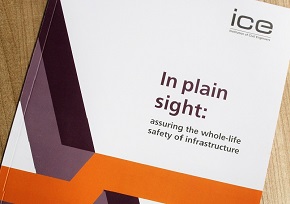
In October 2018, the Institution of Civil Engineers (ICE) published a new report suggesting that structural failures could be averted by doing more to help engineers raise safety concerns.
In Plain Sight: Assuring the whole-life safety of infrastructure, was commissioned following the Grenfell Tower fire, with Professor Peter Hansford chairing a panel that published an interim report ‘In Plain Sight: Reducing the risk of infrastructure failure’ in November 2017.
The report recommends that a new organisation should be created allowing engineers to raise and share safety concerns, and that ICE should play a greater role in empowering engineers to come forward with information relating to near misses and catastrophic incidents. The new body’s remit should allow for design, construction and long-life use concerns to be raised, as well as facilitating information sharing across the wider industry and whistle blowing.
In addition, the report recommends:
- ICE and other professional bodies seek funding for the new sector-wide body, building on the work of Structural-Safety.
- ICE and the Health and Safety Executive (HSE) run an annual event on infrastructure safety issues.
- Strengthening awareness of ICE’s Code of Professional Conduct.
- Identifying risk-related topics for ICE members to include in their annual continued professional development (CPD) learning.
The report will be presented at the ICE Council meeting in December 2018 when a decision to endorse the recommendations will be made.
Peter Hansford said; “As professional engineers, we already know many of the factors that can contribute to the risk of infrastructure failure and we must remain diligent and critical to ensure they don’t stay hidden. This report is about empowering us to have a voice throughout the whole life of the infrastructure we design, construct and operate. I look forward to seeing the whole construction sector take forward these recommendations, working with industry and members to strengthen lines of defence, improve accountability across the sector and mitigate the risk of infrastructure failure to enhance public safety.”
ICE vice president Kyle Clough said; “It is essential that professional engineers feel able to speak up about any concerns they might have, and are provided a clear, confidential way of doing so. Further, it is only by sharing the knowledge about these concerns, accidents or near-misses that the industry can learn and take the necessary steps to stop them happening again.”
You can download the report here.
[edit] Related articles on Designing Buildings Wiki
Featured articles
Check out some of the best features and news from Designing Buildings as well as key stories from around the web.

The Building Safety Regulator announces a call for evidence.

Government approach could undermine delivery and regeneration.
World's first mass timber data centre.

The overlooked environmental aspect of data centre development.
Introduction to radon awareness

New technical information sheet published by CIOB.

Updated supplier guide can help electrical contractors engage with NHP.

CIAT confirm the winners of the 2026 architectural technology awards.

Government launches a one stop shop for flood preparedness.

Sir Edwin Lutyens: Britain's greatest architect? Book review.

CIOB publishes free template to help assess and manage risks.
ECA's reflections on Party Conference season

Burnham wants to be confident of winning before asking for a fresh mandate.
New Chief Construction and Scientific Adviser

Sergio Cavalaro, Professor of Infrastructure Systems at Loughborough University.
Building safety levy for England

CIAT publish estimator tool for members.